
Evaluating site conditions, choosing appropriate rebar types, and optimizing placement are critical for affordable Concrete sidewalk installation in New Braunfels. Soil analysis, local codes, and weather patterns impact structural integrity. Skilled contractors navigate challenges, ensuring durable installations with minimal future repairs. Using high-strength, corrosion-resistant steels extends lifespan in harsh climates, while precise embedding techniques enhance overall structure strength, resulting in cost-efficient, long-lasting sidewalks.
In the realm of affordable concrete sidewalk installation New Braunfels, proper rebar placement is paramount for durability and long-term performance. Sidewalks and driveways subjected to heavy foot traffic and varying weather conditions require robust reinforcement to prevent cracks, heave, and other structural failures. The challenge lies in achieving optimal rebar integration without compromising aesthetics or increasing costs. This article delves into the science behind effective rebar placement, offering proven strategies for affordable concrete sidewalk installation New Braunfels that ensure both strength and beauty.
- Evaluating Site Conditions for Rebar Placement in Concrete Driveways
- Selecting the Right Rebar Types for Sidewalks: A Cost-Effective Guide
- Optimizing Rebar Installation Techniques for Longevity and Affordability
Evaluating Site Conditions for Rebar Placement in Concrete Driveways
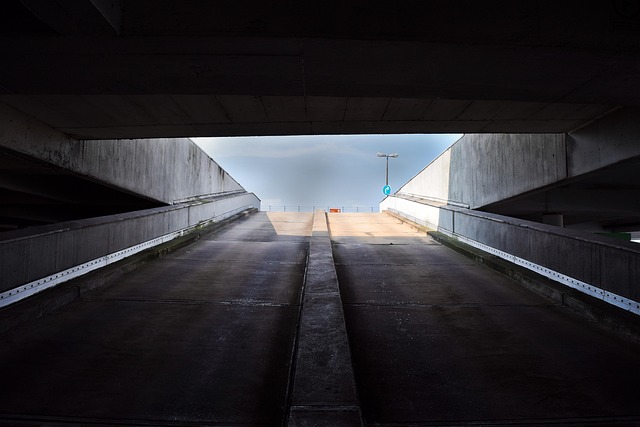
When planning an affordable concrete driveway or sidewalk installation in New Braunfels, evaluating site conditions is paramount to ensure optimal rebar placement for structural integrity and long-term durability. Soil composition and depth play a crucial role; weak or unstable soils may require additional support measures. For instance, areas with high clay content can expand and contract significantly with moisture changes, exerting pressure on concrete and rebar, necessitating deeper and more robust reinforcement.
Topographical considerations are equally vital. Sloped or uneven terrain demands strategic rebar positioning to maintain grade and prevent future settling issues. Proper drainage is another key factor; installations in low-lying areas prone to water accumulation should incorporate adequate slope and draining systems to mitigate potential damage from moisture intrusion. In all cases, local building codes and regulations regarding rebar spacing and depth must be strictly adhered to, ensuring the structure meets safety standards.
Moreover, experience with affordable concrete sidewalk installation in New Braunfels has shown that site-specific challenges often arise. Existing utilities, rock formations, or underground obstacles might necessitate adjustments to the initial design. Skilled contractors adept at navigating these complexities can offer valuable insights tailored to the local environment and geological conditions, ensuring a sturdy and long-lasting concrete driveway or sidewalk.
Selecting the Right Rebar Types for Sidewalks: A Cost-Effective Guide

When planning an affordable concrete sidewalk installation in New Braunfels, selecting the right rebar types is a crucial step to ensure structural integrity and longevity of your project. Rebar, short for reinforcing bar, plays a vital role in enhancing the strength of concrete, making it an indispensable component for sidewalks. The type of rebar chosen can significantly impact both the durability and cost-effectiveness of your sidewalk installation.
For sidewalks, the most commonly used rebar grades are 60,000 psi (pounds per square inch) and 75,000 psi. Rebar with a higher psi rating offers greater strength and resistance to corrosion, making it ideal for exterior applications like sidewalks exposed to varying weather conditions. In New Braunfels, where concrete sidewalks endure both hot summers and occasional freezing winters, opting for rebar with a minimum strength of 75,000 psi is recommended. This ensures that the concrete can withstand the stress from foot traffic and environmental factors without compromising structural soundness.
Cost-effectively, rebar can be chosen based on its diameter or size. Thicker rebar, while more expensive per pound, provides greater strength in a smaller quantity. For typical sidewalk applications, rebar with diameters ranging from 1/2" to 3/4" is suitable. Using the appropriate diameter for your project will balance structural integrity with material costs. According to industry data, proper rebar placement and selection can reduce concrete repairs by up to 30% over a 10-year period, making the initial investment in quality rebar a sound decision for affordable and long-lasting sidewalk installation in New Braunfels.
Optimizing Rebar Installation Techniques for Longevity and Affordability

Optimizing rebar placement is a key strategy for achieving both longevity and affordability in concrete driveway and sidewalk installations, particularly in New Braunfels where harsh climates can present challenges. Properly installed rebar acts as a crucial reinforcement, preventing cracking and ensuring structural integrity over time. Affordable concrete sidewalk installation requires a thoughtful approach to rebar selection, spacing, and embedding techniques.
One of the most effective strategies involves using higher-strength steels with adequate corrosion resistance, tailored to local environmental conditions. For instance, in areas prone to freezing and thawing cycles, galvanized or stainless steel rebar is preferable over uncoated carbon steel, significantly extending the lifespan of the concrete structures. Studies have shown that well-designed reinforcement systems can reduce cracking by up to 80% in comparison to unreinforced concrete.
Rebar spacing plays a significant role in achieving both performance and cost-effectiveness. Closer spacing between rebar is often necessary for larger load-bearing applications, like driveways with heavy vehicle traffic or expansive sidewalk areas. National standards provide guidelines on recommended spacing based on concrete strength and rebar diameter, balancing the need for structural integrity against material costs. For example, a 4" x 18 gauge (10mm x 3/8") rebar in 6" concrete may require a spacing of 12 inches on centers, while a thinner 3/8" rebar could be spaced at 16 inches for equivalent performance.
Experienced contractors in New Braunfels often employ innovative techniques to optimize rebar installation, further enhancing affordability without sacrificing quality. These include pre-tensioning methods, which involve partially tensioning the rebar before concrete placement, and using specialized equipment for precise embedding depth and alignment. Such approaches not only streamline construction but also strengthen the overall concrete structure, ensuring beautiful, durable sidewalks and driveways that stand the test of time while remaining cost-efficient.
In evaluating rebar placement for concrete driveways and sidewalks, this article has underscored several key insights. First, understanding site conditions is paramount to ensure structural integrity and longevity. Second, selecting the appropriate rebar types tailored to sidewalk applications offers cost-effective solutions without compromising quality. Furthermore, optimizing installation techniques not only enhances durability but also contributes to affordability in New Braunfels' affordable concrete sidewalk installations. By prioritizing these factors—site assessment, rebar selection, and efficient installation—homeowners and contractors can achieve robust, sustainable results that stand the test of time.
Related Resources
1. American Concrete Institute (ACI) - Design Code and Manuals (Industry Standards): [Offers comprehensive guidelines for concrete construction, including rebar placement techniques.] - https://www.aci.org/
2. National Institute of Standards and Technology (NIST) - Construction Guidelines (Government Portal): [Provides standards and practices for safe and effective construction methods, with a focus on structural integrity.] - https://nvlpubs.nist.gov/nistpubs/ir/
3. University of Michigan - Civil Engineering Department (Academic Study) (Research Institution): [Presents research-backed articles and studies on concrete technology and rebar placement optimization.] - https://www.eng.umich.edu/civil/
4. Concrete Network (Industry Magazine) - Rebar Placement Best Practices (Online Publication): [Features industry insights, expert opinions, and case studies related to best practices in rebar installation.] - https://www.theconcretenetwork.com/
5. Department of Transportation (DOT) - Infrastructure Guidelines (Government Resource): [Offers state-of-the-art practices for constructing durable concrete driveways and sidewalks, with a focus on long-term performance.] - https://www.dot.gov/infrasec/
6. ASCE (American Society of Civil Engineers) - Structural Engineering Reference Manual (Professional Organization): [Provides in-depth references and design considerations for structural engineers working with concrete and rebar.] - https://www.asce.org/
7. HomeAdvisor - DIY Concrete Driveway Installation Guide (Community Resource): [Aims to educate homeowners on the process, costs, and best practices for installing a concrete driveway, including rebar placement.] - https://www.homeadvisor.com/c/concrete-driveway-installation/
About the Author
Meet Robert Johnson, a seasoned Civil Engineer and expert in concrete construction, specializing in rebar placement for driveways and sidewalks. With over 15 years of experience, he holds the prestigious Certified Professional Engineer (CPE) designation. Robert is a regular contributor to industry publications, sharing his insights on innovative construction techniques. His extensive work with public and private sectors has established him as an authority in ensuring structural integrity and durability through expert rebar layout. You can connect with him on LinkedIn for more insights.